How to get paid faster: 11 practical strategies for freelancers and small businesses
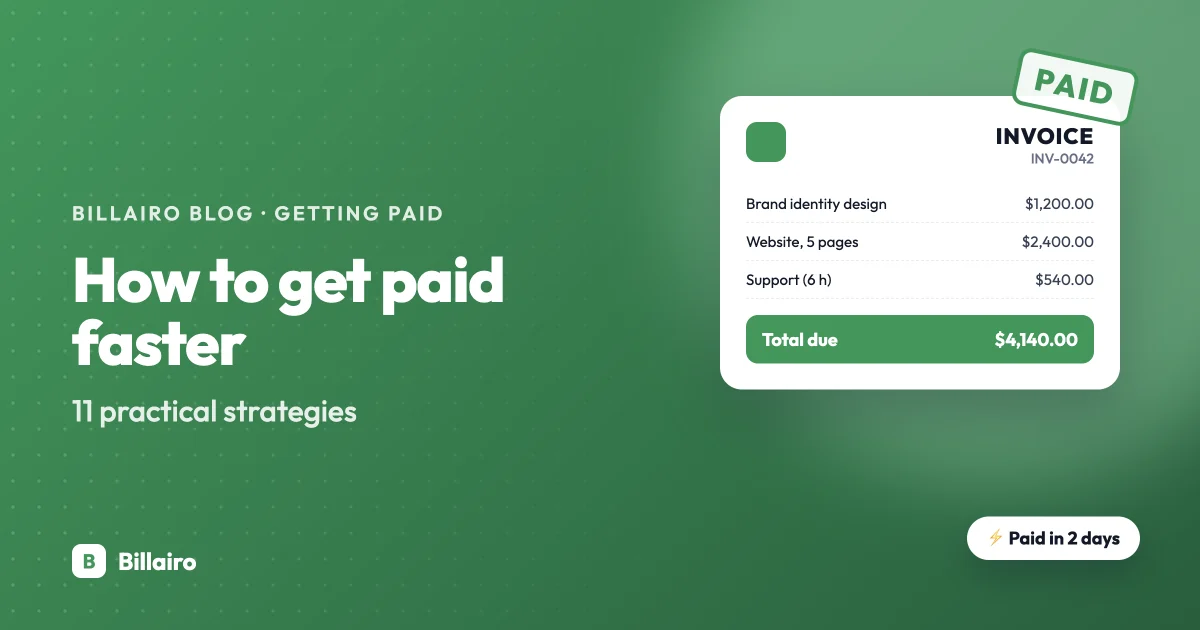
Eleven practical ways to shorten the time between finishing the work and getting paid — from clear terms and instant invoicing to payment links, reminders and a follow-up sequence.
 Billairo team
4 min read
On this page
- 1. Set clear payment terms from day one
- 2. Shorten your payment terms
- 3. Ask for a deposit
- 4. Send invoices immediately
- 5. Get the invoice right first time
- 6. Make paying easy (payment links and QR codes)
- 7. Use automatic reminders
- 8. Offer an early payment discount
- 9. Know who you're invoicing
- 10. Use a professional follow-up email sequence
- 11. Know when to escalate
- Track it all in one place
- Frequently asked questions
- What's the fastest way to get paid for an invoice?
- How many reminders should I send?
- Do early payment discounts work?
- Can I stop working for a client who hasn't paid?
Late payment isn't just annoying — it's the most common reason small businesses run short of cash. The good news is that most of the delay is in your control. These eleven strategies cover the whole journey, from before you start the work to the day you have to escalate.
1. Set clear payment terms from day one
Agree the price, the payment schedule and the due date before you start, in a quote or contract the client accepts in writing. Then repeat the terms on every invoice. Clients pay faster when the invoice confirms something they already agreed to. See invoice payment terms explained.
2. Shorten your payment terms
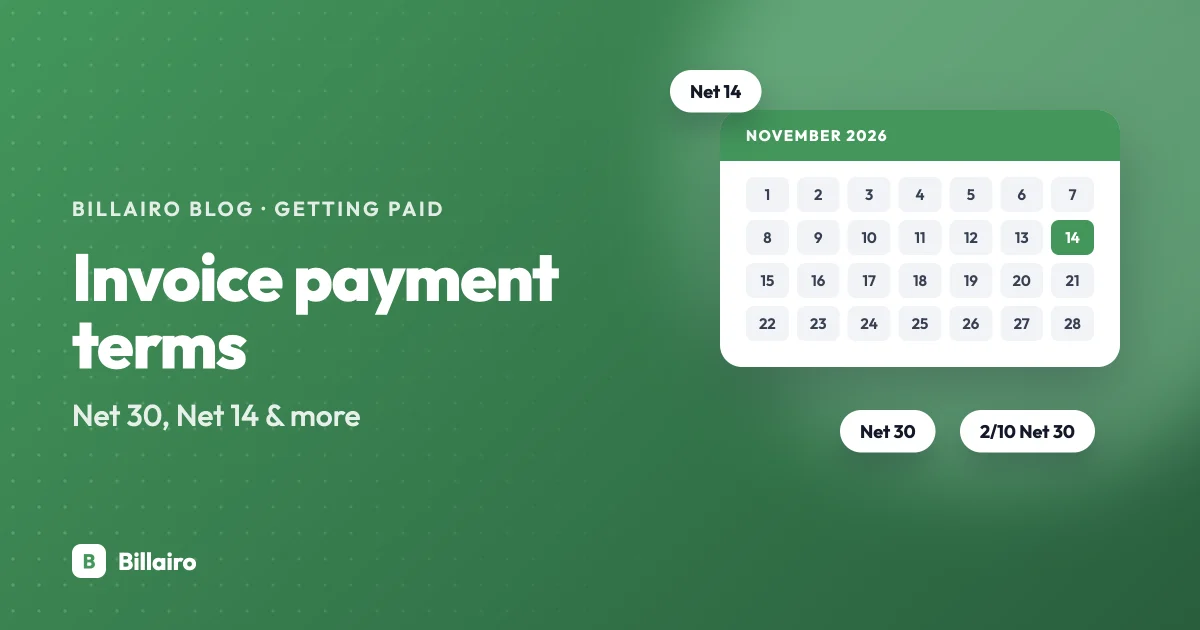
Clients tend to pay close to the deadline, whatever it is. Moving from Net 30 to Net 14 roughly halves the time you wait, and most small clients won't object.
3. Ask for a deposit
For projects and custom orders, take 30–50% upfront. You get paid sooner, you cover your costs, and you know the client is committed. Billairo can turn a quote into a deposit invoice and deduct it from the final bill automatically.
4. Send invoices immediately
Invoice the day the work is delivered. Every day an invoice sits in your drafts is a day added to when you get paid. For long jobs, invoice at milestones instead of waiting for the end.
5. Get the invoice right first time
Invoices with missing details bounce. Address it to the right person, include the client's purchase order (PO) number, describe the work clearly and put the due date on it as a date. Our invoice checklist covers everything.
6. Make paying easy (payment links and QR codes)
The fewer steps between "approved" and "paid", the better. Put clear bank details on every invoice, and add a payment link for clients who prefer to pay by card or PayPal. A QR code on the PDF lets clients open the invoice and pay from their phone. In Billairo you can add pay links and QR codes; the money goes straight to your own account.
7. Use automatic reminders
A reminder a few days before the due date, on the day and after it catches most late payments without you writing a single email. Automatic payment reminders are consistent and polite, and they stop as soon as the invoice is paid.
8. Offer an early payment discount
A small discount for quick payment — for example "2/10 Net 30", 2% off if paid within 10 days — can speed up payment from larger clients. Price it in: 2% of the invoice is a real cost, so use it where faster cash is worth it.
9. Know who you're invoicing
For new clients, especially larger companies, ask before you start: who approves invoices, which details they need, and when they run payments. Many companies pay on a fixed cycle; an invoice that arrives the day after it might wait a whole month.
10. Use a professional follow-up email sequence
When reminders aren't enough, follow up personally and keep it friendly and factual:
- Day 1 overdue: a polite note with the invoice attached and a payment link.
- Day 7: ask when payment is scheduled, and whether anything is holding it up.
- Day 14: a firmer email stating the amount, the original due date and a new deadline. Mention late payment interest if your terms allow it.
- Day 30: a phone call. Problems that drag on by email are often sorted in five minutes on the phone.
Email templates you can copy are in our guide to invoicing for freelancers.
11. Know when to escalate
If an invoice is well overdue and the client isn't responding:
- Pause further work until the account is up to date.
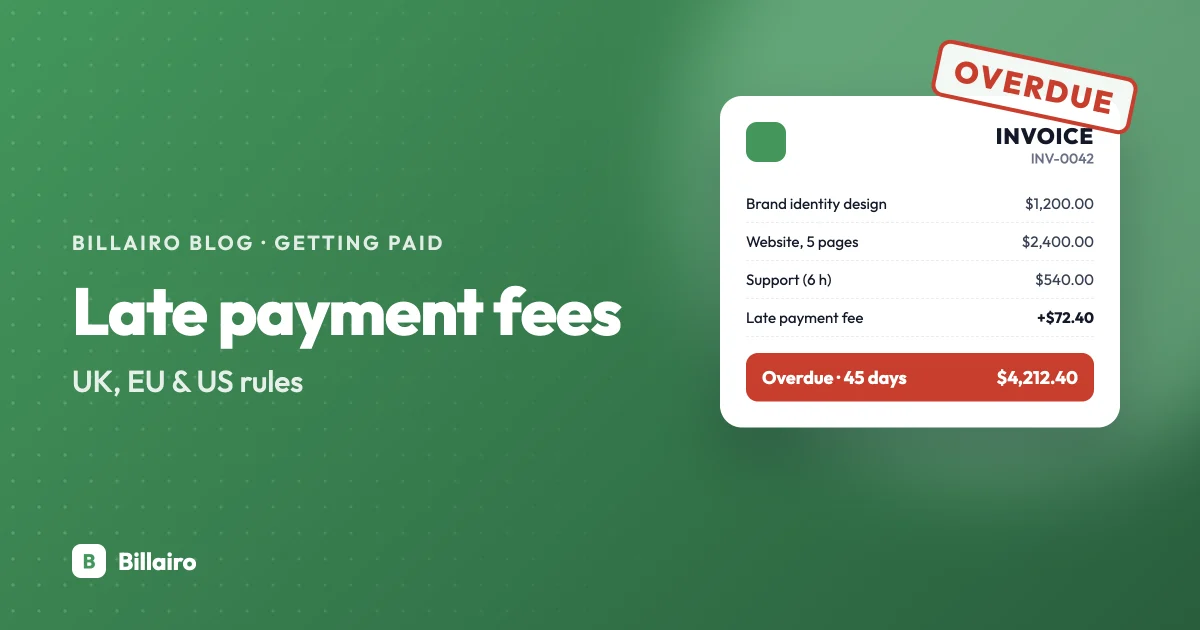
- Charge late payment interest. In the UK and EU you have a statutory right to interest and fixed compensation on late business payments. See late payment fees.
- Send a formal letter before action with the amount, the deadline and what happens next.
- Use small claims court or a debt collection agency as a last resort.
Track it all in one place
You can't chase what you can't see. A simple list of every invoice, its due date and what's been paid shows you at a glance who to follow up with. Billairo shows what's owed and overdue on your dashboard, and lets you record full and partial payments as they arrive. Start on the free plan.
Frequently asked questions
What's the fastest way to get paid for an invoice?
Send it the day you finish, with a short due date and a one-click payment link. Clients who can pay by card from their phone often pay on the day they receive the invoice.
How many reminders should I send?
Typically one before the due date, one on the day, and two or three after it. Beyond that, switch to a personal email or phone call.
Do early payment discounts work?
They can, especially with larger clients whose finance teams look for discounts. Make sure the faster cash is worth the discount you give.
Can I stop working for a client who hasn't paid?
Generally yes, if your agreement allows it. Say in your terms that work may be paused when invoices are overdue.